Thursday, August 7, 2008

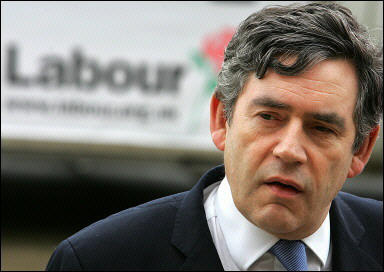
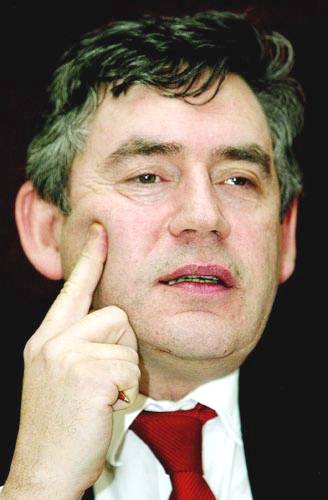
Doubts about Miliband

So the latest bit of tittle-tattle is that David Miliband might try to replace Brown as PM.

In a previous incarnation as a civil servant Woody actually met David Miliband a couple of times. That encounter, and my impressions over a period of time suggest that as a possible PM, while he obviously has strengths, he has some serious flaws too.

First, the good.

The good
  • He's intelligent but doesn't come across as a brainbox.
  • He's got a pleasant, English voice.
  • He's below 50 and can appear 'fresh'
  • He hasn't been associated with any particular disasters or cock-ups yet
  • He's a policy wonk
The bad
  • He's a policy wonk.
  • He's intrinsically tied up with the Blair years: spin, triangulation etc.
  • He can be rude and abrasive, apparently without any good reason.
  • He is prone to terrible gaffes
  • Like Brown, he wants it handed to him on a plate, which doesn't bode well for his ability to campaign effectively.
  • He lacks any roots in the party - he was parachuted into a safe seat by Blair so probably won't be tolerated by the PLP.
Overall, Miliband is the spoilt brat of the Labour party and has the traits to match. He has reached one of the highest offices in the land without ever running a major department, with few or no roots in the party, and without having to campaign hard for his position. He owes where he is to good connections and his relations with Brown and Blair.

What this means is that he lacks the discipline, judgement, or strength to be an effective leader.

Wednesday, July 16, 2008

Could consumer price inflation be caused by higher rates?


Woody spends much of his time tutoring A-level students in economics and hence has to spend quite a lot of time pretending that standard theory about growth and inflation is adequate. However now that the exams are finished he can suspend belief for the time being and instead try to make sense of what is going on.

And the question that struck me was: could it be that the inflation in consumer prices that we are experiencing is the result of tighter credit conditions, rather than excessively loose ones as one would normally suppose?

My thought process went as follows.

When monetary conditions were loose, it didn't alter the demand for consumer goods very much because demand for them isn't that income elastic. (Richer people don't really spend that much more on petrol or food.) But loose monetary conditions reduced the costs for firms making and selling consumer goods, so that supply grew and prices therefore remained pretty low. Instead people spent more on housing which is highly income elastic. So loose monetary policy created house price inflation and consumer price disinflation / deflation. So far so good.

Now that monetary conditions have tightened substantially (a higher base rate + a higher risk premium demanded by lenders), this dynamic has reversed. People's demand for food, oil, and consumer goods hasn't altered all that much (because it's income inelastic). But the cost to firms of making and selling those products has risen sharply as borrowing costs have risen. Hence supply has fallen, but demand has stayed roughly the same - causing prices to rise. And the reverse has happened in housing. Higher borrowing costs have caused demand for housing to fall and supply to simultaneously rise - leading to falling prices.

So I tried to gather some data to check whether this might show up. I put together the chart at the top which shows how LIBOR and CPI have changed over the past few years. There is a pretty close correlation, but (and Woody might well be imagining this), the major trends appear to occur in LIBOR first, then some months later in the CPI. If so, then the current increase in CPI may have been caused by the spike in LIBOR caused by the credit crunch towards the end of 2007.

If this is right it suggests that the standard AS / AD approach to growth and prices fails to appreciate that in the modern economy - particularly for goods not usually financed through borrowing - the effect of higher borrowing costs may be more powerful on AS than it is on AD in the short run, hence having a perverse effect on prices.

Perhaps once the falling housing market hits demand in the wider economy, leading to unemployment, lower investment and lower consumer confidence, then but only then you get a fall in demand that outstrips the fall in supply caused by the higher borrowing costs. Then you get deflation / disinflation.

So maybe tighter monetary policy in the short-term leads to consumer price inflation, but in the medium-term to consumer price deflation. If this is right it suggests that CPI will indeed fall in the next year as a result of the fall-back in LIBOR, but won't fall substantially until LIBOR goes much lower.

Oh dear, what will Woody tell the kids?

Tuesday, July 15, 2008

Rising inflation to clobber profits, jobs


Yet another 'surprising' surge in inflation to 3.8% on the CPI (Completely Pointless Index). As usual the inflation is coming mostly from imported goods, particularly oil and food. Firms will try to pass on these increases to consumers, but will mostly fail because real wages are falling and consumer credit is drying up.

Instead they will mostly have to take the hit in their profit margins (which have been at all time highs over the past few years) as consumers cut back and find alternatives.

This means lower investment and higher unemployment, exacerbating the forthcoming recession. This is already happening. Confidence in the service industries has plummeted to an all-time low (see chart). Meanwhile, unemployment has jumped at its fastest rate for 15 years.

In an economy where growth is entirely reliant on the service sector this spells disaster. Anyone suggesting a rate increase at this stage might possibly help matters is barking.

Someone tell Brown that he is Prime Minister


One thing that Woody is finding increasingly enervating is Brown's habit of talking as if he is not in control of government policy, but rather as if he is leader of the Opposition, or even worse, some grubby lobbyist. Take this for example:

What I want to see is anybody who is using a knife goes to prison,'' Brown said during his monthly press conference today. (Bloomberg, my bold.)

It's as if Richard Branson announced "What I want to see is that all Virgin planes carry the Virgin logo".

Well you're the boss, make it happen. That's the point of being Prime Minister.

He just wants to 'look tough' but avoid taking any decisions that might end up back-firing on him. Totally pathetic.

Along with this, he spends most of his time and energy hectoring other people to change their behaviour.

This is wholly unacceptable, Mugabe must not be allowed the steal the election which is now less than two weeks away, Brown said.

Ok what's happening in Zimbabwe is terrible. But this is just hot air isn't it? There is zero chance that Mugabe will pay any attention whatsoever to what Brown says. So how about actually doing something in the control of the British government instead?

Or how about this? Telling British car producers what they should be making? What a total and utter waste of time.

What this reveals is that Brown is psychologically unfit to lead a government. He has the mindset of an oppositionalist - someone comfortable pressing for change, but not responsible for delivering it. Woody has been here before in another guise.

He should never have been allowed to reach high office.

Monday, July 14, 2008

The debate over rates is pointless - we're in trouble either way


While there is growing consensus that the global economy is in big trouble, there is an ongoing and very confusing debate about the cause of the trouble, and therefore what central banks should be doing about it.

Broadly there appear to be two schools of thought. In one corner stand the Inflationists which point to the take-off in inflation in China, India and much of the developing world. They see this as leading to higher inflation in the West, perhaps leading to an inflationary spiral which destroys the value of our currency (see e.g. Eric Janzen). These people are often the types to be burying bars of gold in the ground.

In the other corner stand the Deflationists which see the destruction of credit, and mounting bank losses as potentially bringing about a deflationary spiral which could ultimately lead to something like the Great Depression. See e.g. Mish. They think that banks should be vigorously cutting rates in an attempt to prevent this. These guys are buying bonds and waiting for the dust to settle.

These two camps are currently engaged in a lively debate over whether banks should be lowering or raising rates.

The fact is that the debate is pointless. It doesn't really matter whether central banks raise or lower rates. Either way the global economy is going to face a painful period of readjustment which will probably mean a period of recession and lower living standards in both the West and most emerging economies.

If we slash rates, our currencies will fall, imports will get much more expensive, eroding spending power, leading to a consumer recession, falling profits and rising unemployment. On the other hand we can raise rates, which will clobber the housing market further, depress consumer spending and lead to falling growth and unemployment.

Either way the result is basically the same. Central banks can't fight the economic fundamentals.

For the past 10 years the West and China have been stuck in a Faustian pact in which the yuan has been kept artificially low, allowing the Chinese to grow fast, while Western consumers could buy more goods than they could really afford. The large-scale sale of yuan and purchase of dollars by the Chinese allowed this to persist while keeping interest rates low in the West.

It seemed to be the best of all worlds. Continuous growth, low inflation, low interest rates, low unemployment, fast growth in the developing world. But it couldn’t go on forever, for it was built on a lie – the fiction embodied in the artificially low value of the yuan against other major currencies.

This lie allowed the Chinese to expand production and exports without having to worry about bothersome things like productivity or efficiency. And it allowed Western consumers to increase their spending while their wages stagnated.

But of course it couldn’t go on forever. Either the Chinese would be unable to buy dollars as fast as the rest of the World was selling them, or American consumers would be unable to spend as fast as China wanted to produce. In the end it was a bit of both. By 2007 US consumers were maxed out, and could spend no more, while servicing their huge debts. At the same time investors started to dump dollars en masse, sensing an economic downturn.

What we are seeing is the beginning of a gradual and inevitable reversal in the terms of trade. Chinese goods aren’t really getting more expensive, it’s just that they are no longer able to subsidise them as much as they have been. They’ve kept the exchange rate down but inflation is now making that effort pointless. The same goes for oil exporting nations. The lie is finally being exposed, and we are all facing the consequences.

In the longer term the result of this will be lower consumption (but possibly more production) in the West and lower production (but possibly more consumption) in the East. But that shift is going to be neither swift nor painless.

What central bankers and policy makers should be discussing is not how to prevent, or slow down the necessary rebalancing of the global economy, but rather how it can best be effected with the minimum of lost growth and welfare.

Unfortunately, like many things in life, big changes usually only happen as a result of an extended period of suffering. It's going to be unpleasant.

Thursday, July 3, 2008

No consumption, no growth


Been feeling poorer recently? That's because probably you are.

The chart shows what has happened to the level of real wages (growth in earnings adjusted for RPI) since Dec 06.

That's right over the course of a year the average worker has got about 10% worse off as a result of wage growth falling below RPI.

In the past few weeks the commentariat have gradually come round to the idea that the UK economy may be in trouble. Most economists now predict a slowdown in the UK economy with a few foreseeing a recession in 2009.

Now Woody likes nothing better than to violently disagree with a growing consensus. And in a manner of speaking he does.

The consensus is still ridiculously over-optimistic on growth.

In our economy the primary driver of growth is the consumer. Real wages are falling. For the past few months the UK consumer has been raiding the remainder of its meagre savings and slapping the rest on plastic in a desperate struggle just to maintain living standards.

Meanwhile borrowing costs are rising, as is unemployment. House prices are falling, and mortgage equity withdrawl is drying up.

So how on earth can consumption grow in this environment? It can't, it's going to fall sharply, and stay lower for a long time while household balance sheets are repaired. And with falling consumption will come recession.

First rule of blogging courtesy of another Woody

Woody Allen is a big hero of mine. There's a quote in one of his films - Love and Death I think - which goes something like:

"When it comes to sexual relations, it's the quality of your encounters that matters, not the quantity. But if the quantity falls below once in 6 months you should definitely look into it."

I think this applies in most things, including blogging, and is particularly apt for Mr Allen, who according to IMDB has directed 44 films, and written 61. Only a few of these achieved brilliance, e.g. Annie Hall, Hannah and Her Sisters, Manhattan, Love and Death, and Everything You Wanted to Know About Sex But Were Afraid to Ask, to name a few favourites.

But because of these we forgive him a lot of rubbish.

**Etched on Woody's forehead**: "Quality matters, but only if you have quantity."

Ok, that's two for today.

Brown calls on self to take tough action on knife crime

Today Prime Minister Gordon Brown took the unprecedented step of calling upon himself to “stop dithering and finally do something about the epidemic of knife crime in this country.”

Mr Brown made the interjection at a press conference called after Jermayne Phillips became the 42nd teenager to be stabbed to death in London this year. Mr Phillips, 17, of Tottenham, was stabbed repeatedly in the teeth while travelling on the 134 bus.

Responding to himself, Mr Brown pledged to “do his utmost to take knives off our streets and put them back in kitchens.” He promised to set up a Stop Stabbing Taskforce to spearhead the new campaign. However, he said that its success would depend on whether he could secure support from himself to make it happen. He added that “the ball was now firmly in his own court.”

Mr Brown was unavailable to comment.

Thursday, December 27, 2007

Would the real coward please stand up?

Benazhir Bhutto, the supposed saviour of democracy in Pakistan, has been assassinated. This has prompted Gordon Brown, our self-appointed expert on courage, to describe the perpetrators as "cowards [who are] afraid of democracy".

It strikes Woody that this is an excellent example of what psychologists call projection - casting your own obvious failings onto others in an attempt to distance yourself from them.


Just in case anyone forgot, Brown the Clown:

  • Bottled out of standing against Smith for the party leadership in 1992
  • Bottled out of standing against Blair for the party leadership in 1994
  • Did everything he could to ensure that he was handed the party leadership without any opposition or general election
  • Bottled out of a general election in November 2007, when he realised he might lose
So who's really the coward who's afraid of democracy?

Woody apologises for falling off a cliff in his blogging earlier this month. He hopes to be more consistent in future.

Thursday, November 29, 2007

Ignorance should be no excuse


Another week, another scandal.

The Labour Party have been caught breaking a 2000 law they themselves introduced by taking money from David Abrahams when he was known to be avoiding public disclosure by channelling his donations through his employees.

According to the 2000 Act, anyone who did anything which could have made it easier for the secret donations to be made, has committed an offence. The relevant section is below.

Offences concerned with evasion of restrictions on donations

(1) A person commits an offence if he—

(a) knowingly enters into, or

(b) knowingly does any act in furtherance of,

any arrangement which facilitates or is likely to facilitate, whether by means of any concealment or disguise or otherwise, the making of donations to a registered party by any person or body other than a permissible donor.

This is why all the key players are making ignorance the central plank of their defence. Because if they were in anyway knowingly involved in the arrangements, they would have committed an offence.

In Brown's case, he claims:

"I had no knowledge until Saturday night, either of the donations or of the practice which had grown up where they were improperly declared to the Electoral Commission... The money was not lawfully declared."

Woody says: If that's true you should be ashamed, because you had no oversight over the fundraising practices of your own party. And if it's false you should be even more ashamed because you have brazenly lied and cooperated in breaking the law.


In Harman's case, that she did not know that the money came from Abrahams rather than from Kidd.

Woody says: I refer the right dishonourable lady to the answer I gave above.


In the case of Abrahams himself he claims:

"Until the weekend I didn't know it was illegal for a person who hadn't personally donated to have to declare his hand to the Electoral Commission."

Woody says: And I didn't know I couldn't w**k on the bus. You broke the law, and you should face the consequences.


And in any case, the law is totally flawed - ignorance should be no defence at all.

If ignorance is a permissible defence then all Brown and Harman would have to do (and in practice exactly what they seem to have done) is to say to their funding teams "Just get the money in, I don't care how you do it, I just don't want to be told about it or involved in any way."

And then the team would have carte blanche to break the law, with Brown / Harman knowing full well that in the unlikely event that it comes to light they would be able to claim ignorance.

Such a law simply encourages politicians to deliberately lose sight of fundraising, when in fact they should be held responsible for it.

The whole thing stinks to high heaven.

Sunday, November 25, 2007

It's not Black Wednesday - it's a lot worse


Jack Straw, the "Minister for Justice", is furiously fighting back against allegations that Discgate is Labour's equivalent of Black Wednesday - when Britain was forced out of the ERM in 1992,under the Chancellorship of Norman Lamont (right).

He says: "The idea that this is an equivalent to Black Wednesday is utter nonsense."

He's quite right - it's much worse than that.

Black Wednesday was a short-term embarassment which had very beneficial consequences for Britain in the medium-term. It was foolhardy to lose money trying to fight what was a necesssary devaluation of the pound. But once we were ejected, interest rates could come down, enabling us to revive the economy in a way that would have been impossible within the ERM.

Nor did it 'ruin' the Tories' reputaton for economic competence, as is so often claimed. The Tories' reputation was ruined by trying to keep us inside the ERM, not in us being ejected from it. The effort to keep us inside it meant much higher interest rates which triggered a housing market crash and painful recession.

Most people had no idea what Black Wednesday meant, only that they couldn't afford their mortgage any more or were out of a job.

The Discgate saga, on the other hand, is a huge, catastrophic failure in the short-term which will probably have very negative long-term consequences for both the UK and the Labour Party.

For the UK it will probably undermine the public's already shaky faith in government management of data. Indeed why anyone would voluntarily give the government personal information, or tell them the truth any more, is beyond me. This is on top of the potentially disastrous consequences of organised criminals using the data to commit large-scale fraud.

Remember that before this happened the tax credit system was already responsible for nearly £2bn of fraud and overpayment. What's going to happen now?

For the Labour Party, it should - taken together with the numerous other cock-ups they have presided over - ruin their reputation for the prudent management of government affairs. Whether it does so depends largely on whether it does indeed end in large-scale fraud and how smart the Opposition are in exploiting this.

Friday, November 23, 2007

Icebergs don't give you soft landings

With the good ship housing market having apparently hit an iceberg, there are nonetheless still people out there who still think that a 'soft landing' might be possible.

By 'soft landing' they mean some period of stagnation of house prices, presumably followed by the resumption of crazy levels of inflation like we've seen over the past 10 years.

This is pie in the sky. It's of the very nature of these things that there can be no soft landing, that house prices will fall, reposessions will soar, and unemployment will increase, before things eventually bottom out in a few years' time.

Why?

In short, because it's an inherently unstable market, where investors expectations of price changes become self-fulfiliing. Sellers who expect price falls will try and sell as soon as possible, but they will find that buyers are waiting for those price falls to materialise. And if sellers refuse to drop prices, they will simply pull the rug out from underneath the sellers of the house they were going to buy. And so on.

The very factors that led to the boom in the first place are going into reverse and there's little that anyone can do to stop it. Where before we had irrational exuberance, we will now have a period of mounting fear and panic, before reality eventually sets in again.

To summarise, we have: rising borrowing costs, less mortgage availability, weak income growth, and increasing expectations of price falls. That's a crash in the making.

Interestingly Spreadfair now projects that house prices will fall by 7-8% (in nominal terms) by end 2008. I'd probably sell that if I wanted to hedge against falls. But not owning any property, I'm hedged up to my eyeballs anyway.

The ship is sinking, evacuate!


A liner is sinking off the Antarctic after hitting an iceberg.

Meanwhile mortgage approvals hit a record low.

Something about this feels very ominous.

Deckchairs? Titanic? Anyone?

Thursday, November 22, 2007

Don't pay any attention to this idiot


News reaches us that "Sir" John Gieve, member of the Monetary Policy Committee, voted for an immediate rate cut at the last meeting of the Bank of England.

Woody would like to remind people that Gieve has a track record as an irresponsible idiot. He was Permanent Secretary at the Home Office when Blunkett tried to fast-track his nanny's visa but conveniently 'couldn't remember' how it happened. That earned him a knighthood.

He was still Perm Sec when the Home Office was accused of colossal financial mismanagement. He was also personally involved in the (now forgotten) release of a thousand foreign prisoners who should have been deported.

Needless to say this qualified him for a plum job on the MPC, particularly as at the time GB really needed to get rid of Andrew Large who was far too hawkish for his liking.

He's an idiot and a stooge, probably under direct orders from the Clown himself to reignite the economy.

So if Gieve voted for it it's almost certainly the wrong thing to do.
Fortunately it seems likely that other factors will prevent rates from coming down anyway.

1. Sterling is relatively overvalued, making it much harder to cut rates without immediately importing inflation. (This is not the case with the dollar.)

2. Commodity inflation has been soaring and will continue to do so while the yuan is so under-valued.

3. King doesn't want to be seen to make the same mistake as in 2005 when an injudicious rate cut prompted the property market to take off again. Unlike Gieve, King is no idiot.

So rates will probably stay on hold until well into the New Year at least.

NB Woody is quite happy to be debt-free and renting for the time being.

Why is Brown apologising?


Woody is confused.

Brown yesterday apologised for the loss of two discs holding personal data on 25 million children. But why?

If it's a genuine apology then that means he is admitting he is responsible for the breach - in which case surely his position as PM is untenable.

He can't simply be apologising 'on behalf' of HMRC, because HMRC have already apologised for it. They are not some wayward child that Brown has to apologise 'on behalf of'.

On the other hand if it's not a genuine apology then he's just being insincere isn't he? And doesn't that just add insult to the injury already caused?

It seems that Labour think that an apology is just what you do when things are so bad you can't spin your way out of it.

How Discgate has let Blair and Smith off the hook


Here are two people who will be breathing easier today.


It's a fact of life that the media only ever have room for one big scandal. There can only be one 'top story' which obsesses them, and brings out their periodic ability to ferret out interesting and embarassing truths.

But one unfortunate side-effect of this is that when there are several big stories at the same, some people get off too lightly.

It seems that the current massive 'Discgate' scandal, which looks set to rumble on for a while, has taken the pressure of two people who were in a quite a pickle before all this kicked off.

Ian Blair. Who presided over a series of failures in basic policing which led to the shooting of Jean Charles de Menezes. He then tried to deliberately obstruct the investigation of the IPCC. He has just escaped a vote of no confidence by the Met.

That's like Genghis Khan getting the thumbs-up from a band of marauding Mongols. Nevertheless it looks like he's survived.

Jacqui Smith. Whose Department allowed huge numbers of illegal immigrants to work in government security posts and arguably misled Parliament about it.

No one's talking about that any more. Lucky her.


The Opposition would do well not to forget this. Because together it starts to make a compelling case for an arrogant and incompetent government who have let standards slip and failed to fulfil basic governmental responsibilities.

Let's hope McLaren's sacking doesn't push Darling and Brown off the front pages for too long...


Wednesday, November 21, 2007

Why Darling won't be resigning


The government is in a mess. Darling is taking some serious flack for the malinvestment of public money in Northern Rock and the failure to follow basic security procedures at HMRC. But he'll be keeping his job as Chancellor for the time being. Why?

He's probably one of Labour's most competent and experienced Ministers. Believe it nor not Darling is Chancellor mainly because he is actually one of the few Ministers around who has good experience in several major departments without having cocked up anything too badly.

The Tories won't be asking for his resignation. They want to pin this on Brown and taint the whole government. They want it to rumble on for a good while yet, poisoning Brown's reputation for economic competence and making him look at the mercy of events. A quick Darling exit would close it down too easily.

By and large it isn't t his fault. He's obviously the monkey, not the organ-grinder. Anyone with half a brain knows that there's only one person who's responsible for this, and his surname rhymes with Down. And Clown.

Because he is too useful to Brown just where he is. Having Darling in the Chancellor role allows him to do a McAvity and avoid what is obviously his own responsibility. Darling can be his whipping boy, while he 'moves on' to other pressing issues like banning plastic bags and trying to discredit the military.

And anyway, we'd all miss those amazing eyebrows wouldn't we?

Monday, November 19, 2007

Might we be seeing this again at the next election?


One unfortunate feature of both the mainstream media and the blogosphere is that, by and large, commentary on economics and politics remain divorced. The politicos often talk as if all that matters is who said what to whom in Westminster, while the economists spend too much time looking at charts and don't understand how the messy world of politics gets in the way.

What strikes Woody is that political blogs have yet to pick up on the fact that the political atmosphere up until the next election is likely to be dominated by a bad and worsening economic situation.

The general consensus among economic commentators is now that there is a significant likelihood that the next few years will see an economic downturn, a declining or crashing housing market, and rising unemployment. This is already happening in the US, and it seems likely that where they lead we will follow.

A growing economy, with low inflation, interest rates, and unemployment has been the economic back-drop to the entire political scene of the past 10 years.

When that changes, so too will politics. Will this be the nail in the coffin for Labour? Or can Brown 'do a Major' and come through any economic downturn?

Woody will post some more on this when he has the time.


Sunday, November 18, 2007

Are we heading for a constitutional crisis at the next election?

Current Prediction: Labour short 13 of majority

Party2005 Votes2005 SeatsPred VotesPred Seats
CON33.24%20940.01%284
LAB36.21%34636.10%313
LIB22.65%6613.80%20

Prediction based on opinion polls from 22 Oct 07 to 10 Nov 07, sampling 6,624 people.

The above table shows Baxter's current prediction of the likely result of the next election. It predicts that Labour will still be the largest party, but lack an overall majority. The most likely outcome would therefore be a Lab-Lib coalition of some sort.

Baxter's system takes a weighted average of recent survey results and converts them into a likely distribution of seats according to new constituency boundaries.

So if this happened Labour would still be forming a government even though the Tories had polled over 40% of the vote.

Would this really be politically acceptable?

While disparities between voting shares and seat shares are always going to be a feature of the first past the post system the fact is that nothing remotely like this has ever happened in the past. There has only been one election since the war when the party with the most seats did not also have the largest proportion of votes. That was in 1951 when the Tories won the election with 48% of the vote, although Labour actually polled higher, with 48.8% of the vote.

That didn't really bother anyone because the margin was so small, and in any case the Tories had nearly 50% of the vote.

But will people really accept a Labour-led government when they polled a full 4% less than the Tories?

This issue will be made all the more acute by the fact that Labour are already struggling to defend their reliance on Scottish and Welsh MPs to pass laws that primarily affect English constituencies (the so-called West Lothian question).

Could this be the trigger for a change in the electoral system and/or the representation of Welsh and Scottish MPs at Westminster?


Thursday, November 15, 2007

The Nobody PM


It's hard to believe now that some people held out hope that this man would be a great Prime Minister.

After 6 months in the job he's shown that his entire political philosophy can be summarised as follows.

He's Not Tony Blair.
He's Not a Conservative.
He's Not a Socialist.
He's Not Great Mates with Bush.
He's Not Anti-American.
Etc.

The fact is, he's just a nobody who wants power for the sake of power.

When Miliband made that gaffe on Question Time, it seems he pretty much hit the nail on the head.

Blair was a huge disappointment but even he realised that ultimately any worthwhile political career must amount to something positive and substantive.

Brown doesn't even seem to care.